Three paths, and how each one works
Companion, or Dudley at stud
For: Active households who want a well-started Spanish Water Dog, and breeders interested in Dudley.
What is included:
- 01
Early Neurological Stimulation (days 3–16), early crate and house-training
- 02
Hands-on coat-care instruction
- 03
AKC registration, a written health contract, and lifetime breeder support
- 04
For stud: a written contract, health clearances required on both sides, and a repeat breeding if no live litter results
Service dog (through Gotham Paw)
For: People with spinal cord injury, MS, cerebral palsy, or other neuromuscular conditions who need trained mobility tasks.
What is included:
- 01
Selection from a Dudley × Molly litter, based on temperament testing and both parents' published health results
- 02
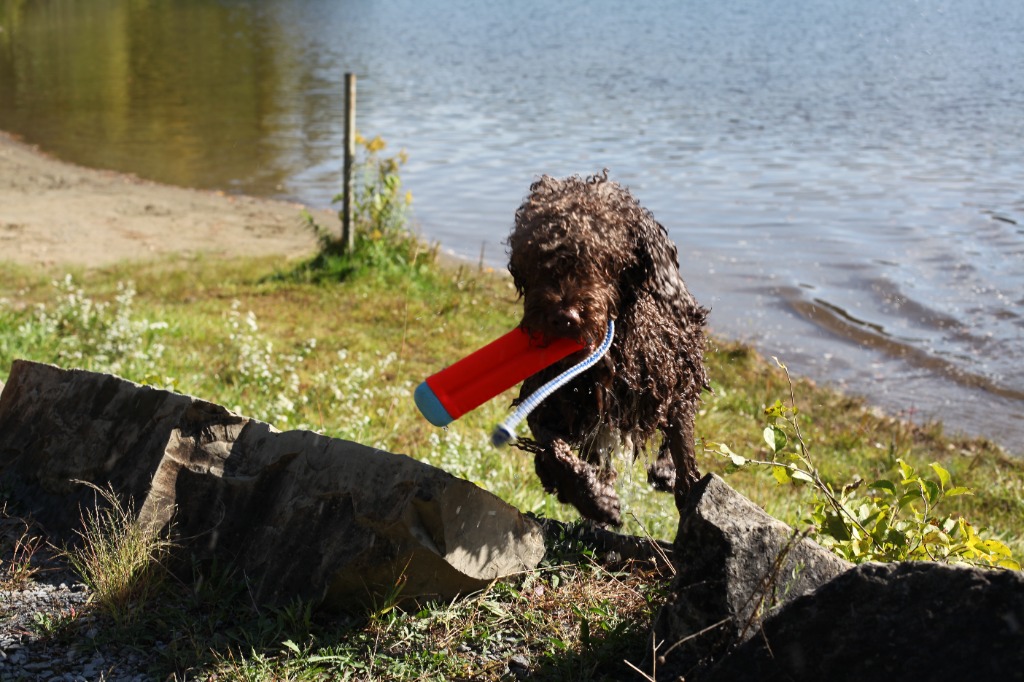
Task training tailored to you: retrieval to hand or lap, door and elevator buttons, tug-to-open doors, carrying, and alerting a caregiver
- 03
Public-access training in the places you go: hospitals, transit, elevators, restaurants
- 04
One-on-one handler training at transfer, plus ongoing support from Gotham Paw
Please know: not every puppy that starts service training finishes it. Prospects released from training are placed as companions, and we will tell you plainly where your candidate stands at each stage.
Therapy dog prospect
For: People who want to volunteer with their dog in hospitals, rehab centers, schools, or senior homes.
What is included:
- 01
A puppy selected for comfort with being handled, quick recovery from startle, and interest in people
- 02
Early exposure to wheelchairs, walkers, carts, and slick floors
- 03
Parents' health results, a written health guarantee, and lifetime breeder support
- 04
A training plan toward the AKC Canine Good Citizen test and evaluation with Pet Partners or Alliance of Therapy Dogs
Service dog, therapy dog, or emotional support animal?
These three terms are often confused, and the differences have legal consequences.
Under the ADA, staff may ask only two questions: whether the dog is required because of a disability, and what task it has been trained to perform. No certificate, vest, or registration is required by law. Full details: Service dog vs. therapy dog vs. ESA guide →
Why we focus on retrieval and doors, not balance work
Spanish Water Dogs weigh 31–49 lb. That is a good size for picking things up, pushing buttons, opening doors, and fitting under a wheelchair or a restaurant table. It is too small for counterbalance or bracing for an adult. Those tasks put weight through the dog's shoulders and spine, and mobility programs reserve them for much larger dogs. If you need balance support, we will tell you so and point you toward programs that train larger breeds.